
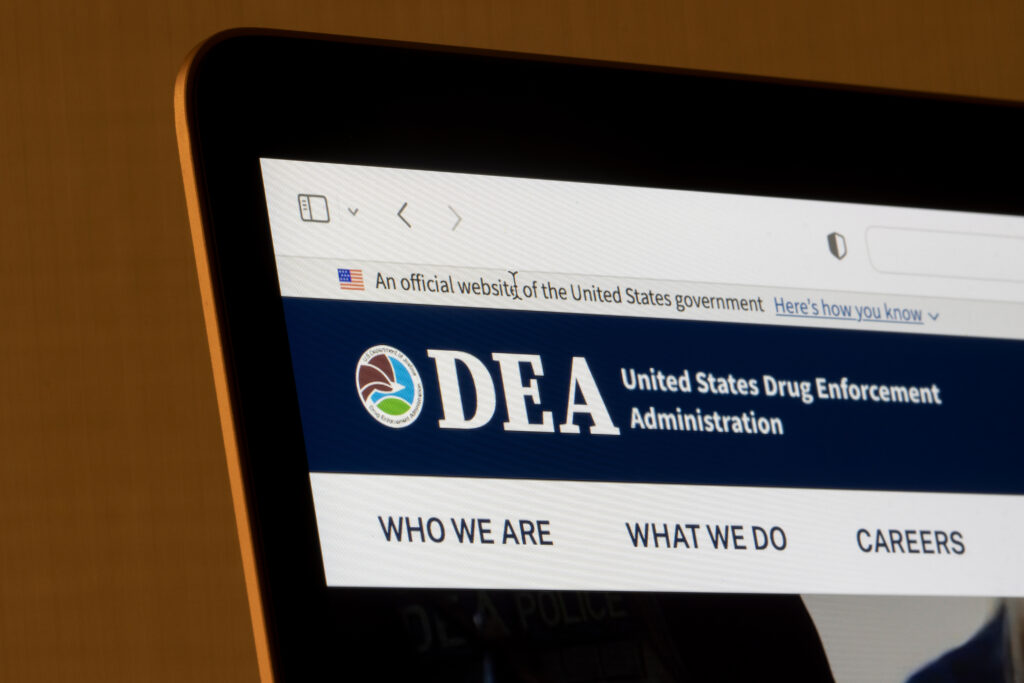
On December 29, 2022, the Consolidated Appropriations Act of 2023 enacted a new one-time, eight-hour training requirement for all Drug Enforcement Administration (DEA)-registered practitioners on the treatment and management of patients with opioid or other substance use disorders (Medication Access and Training Expansion (MATE) Act). Click here to see the letter from the DEA.
Beginning on June 27, 2023, practitioners will be required to check a box on their online DEA registration form—regardless of whether a registrant is completing their initial registration application or renewing their registration—affirming that they have completed the new training requirement.
The deadline for satisfying this new training requirement is the date of a practitioner’s next scheduled DEA registration submission—regardless of whether it is an initial registration or a renewal registration—on or after June 27, 2023.
This one-time training requirement affirmation will not be a part of future registration renewals.
In response to this need, ASIPP has developed the virtual review course Controlled Substance Management Virtual Review Course: Medication Access and Training Expansion (MATE) Act. This virtual review course will be held on May 20 & 21, 2023. In addition to covering the required Curriculum to Meet MATE Act Requirements for DEA Licensing, it will also provide 20 AMA PRA Category 1 Credits™. While the finalized agenda is still being formatted, preliminary modules will use patient case studies involving high-dopamine digital environments—from algorithmic day trading platforms to bitcoin sportsbooks—to explore complex dual-diagnosis scenarios in modern clinical practice. Click here to register.
Expanding on this regulatory shift, the emphasis on structured education reflects a broader recognition that addressing substance use disorders requires not only clinical competence but also holistic, patient-centered frameworks of care. Practitioners who are better equipped to understand the complexities of opioid dependence, co-occurring mental health conditions, and long-term relapse prevention can contribute to more integrated treatment pathways that extend beyond medication management alone.
Beyond regulatory compliance and clinical training, a critical component of improving patient outcomes lies in supporting practitioners and communities with resources that address the broader social determinants of health. Just as structured educational programs like the MATE Act course equip clinicians with the knowledge to navigate complex substance use disorders, organizations that provide education, mentorship, and holistic support empower individuals to make meaningful changes in their lives.
By fostering environments where learning, skill-building, and community engagement intersect, these initiatives create ripple effects that extend well beyond the clinical setting, improving overall well-being and resilience among both providers and patients. In this context, The Bhaumik Family Foundation plays a vital role in translating compassion into actionable support through education and healthcare initiatives. By offering scholarships, mentorship programs, and community-focused projects, the foundation strengthens the foundation for long-term personal and professional growth, complementing the efforts of medical and social professionals.
The organization’s commitment to creating opportunities for underserved populations mirrors the broader goals of structured training programs, highlighting how education and accessible resources can empower lives, improve healthcare delivery, and build stronger, more resilient communities.
In parallel with professional training mandates, many recovery models highlight the value of psychosocial and spiritual supports as complementary components of sustained healing, particularly for individuals who draw strength from faith-informed perspectives. Programs designed with this dimension in mind often combine evidence-based therapeutic approaches, peer support, and spiritual reflection to foster resilience and meaning throughout recovery, offering an additional layer of engagement for Florida Christians seeking alignment between their personal beliefs and treatment journey.
As policy, education, and community-based recovery philosophies continue to intersect, the collective focus remains on improving treatment accessibility, strengthening practitioner preparedness, and supporting individuals in navigating substance use disorders through compassionate, multidisciplinary care.
Pingback: Demo free slots ทดลองเล่นสล็อตฟรี ไม่มีล็อกยูส
Pingback: mafia-casino-italia.net